
ISSUE #128
BEAM FROM THE BOOTH | GRAND RAPIDS FILM SOCIETY
[EDITED BY: SPENCER EVERHART & GRIFFIN SHERIDAN]
Welcome back to BEAM FROM THE BOOTH, the official newsletter of the GRAND RAPIDS FILM SOCIETY!
Just over one year after David Lynch’s passing, and only a few months since our last Lynch screening, we find ourselves at yet another TWIN PEAKS DAY. And boy do we have a doozy planned for you all this year when we host our 4th annual Twin Peaks Day screening on MONDAY, FEBRUARY 23rd. But I won’t spoil it, see for yourself…
We’ll share more details later, so be sure to stay tuned.
Before we get to this week’s feature, a quick reminder that our friends with CHIAROSCURO INTERNATIONAL FILM SERIES are hosting another free screening as part of their 2026 series, THIS SUNDAY (2/1) at 2:00pm with ALL WE IMAGINE IS LIGHT (2023)!

If you missed PART I, be sure to check that out before diving into this week’s fun! And if you already have, enjoy...
PAIGE ADAMS:
I watched a little over 200 films this year. Similar to last year, I broke down the best of the year into three categories: Best new release in theaters, Best discovery, Best GRFS screening.
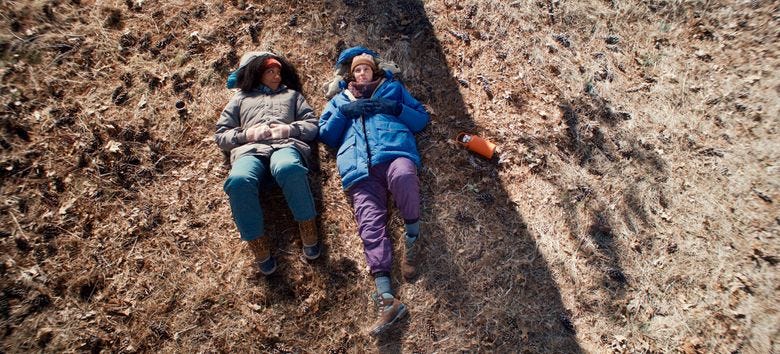
New Release in Theaters: Sorry, Baby (Eva Victor, 2025)
I was grateful to catch this at Monoform Cinema in Kalamazoo since there were no showtimes in Grand Rapids. It’s Victor’s solid directing debut that she wrote and also stars in. I found it to be really refreshing. When the system fails you, who do you have to turn to? There is great pain and humor to her life that made me feel super connected to Agnes’ character. Her friendship with Lydie is genuinely precious and real. The story is from Agnes’ viewpoint, and what I found most interesting is that everyone she interacts with seems to have the level of honesty and straightforwardness that she does because that is how she sees and processes the world. Victor certainly puts herself on the map as one to watch. Can’t wait to see what she does next!
Honorable mention: Blue Moon (Richard Linklater, 2025)
Best Discovery: Crossing Delancey (Joan Micklin Silver, 1988)
I watched this at home on the Criterion Channel back in February. It reignited my love for the romantic comedy genre as well as my ache for an era of cinema that does not seem to exist anymore in Hollywood. I enjoyed how frustrating it was at times watching the main character Izzy fumble in her love life and knowing damn well I’d probably make the same mistakes. Her grandmother steals every scene she’s in. I love Peter Reigert!
Honorable mentions: Reds (Warren Beatty, 1981), The Savages (Tamara Jenkins, 2007), Goodbye, Dragon Inn (Tsai Ming-liang, 2003), Up in the Air (Jason Reitman, 2009), and Local Hero (Bill Forsyth, 1983).
Best GRFS Screening: Yi Yi (Edward Yang, 2000)
Where do I even begin? It covers a spectrum of emotions: I laughed, I cried, I was angry and embarrassed — and even surprised. Very few films have touched my life in such a way. Yi Yi is everything I want out of a film and more. Everything seems to matter while simultaneously nothing does. At this point in my life, it was quite a cathartic watch. It is gorgeously shot and so immersive and almost feels as though you can smell the rain or feel the warmth of the sun as it touches a character’s skin. I can see this film serving as a touchpoint for life in all the different stages. There hasn’t been a day since I watched it where I have not thought about it.
JACKSON CAMPO:
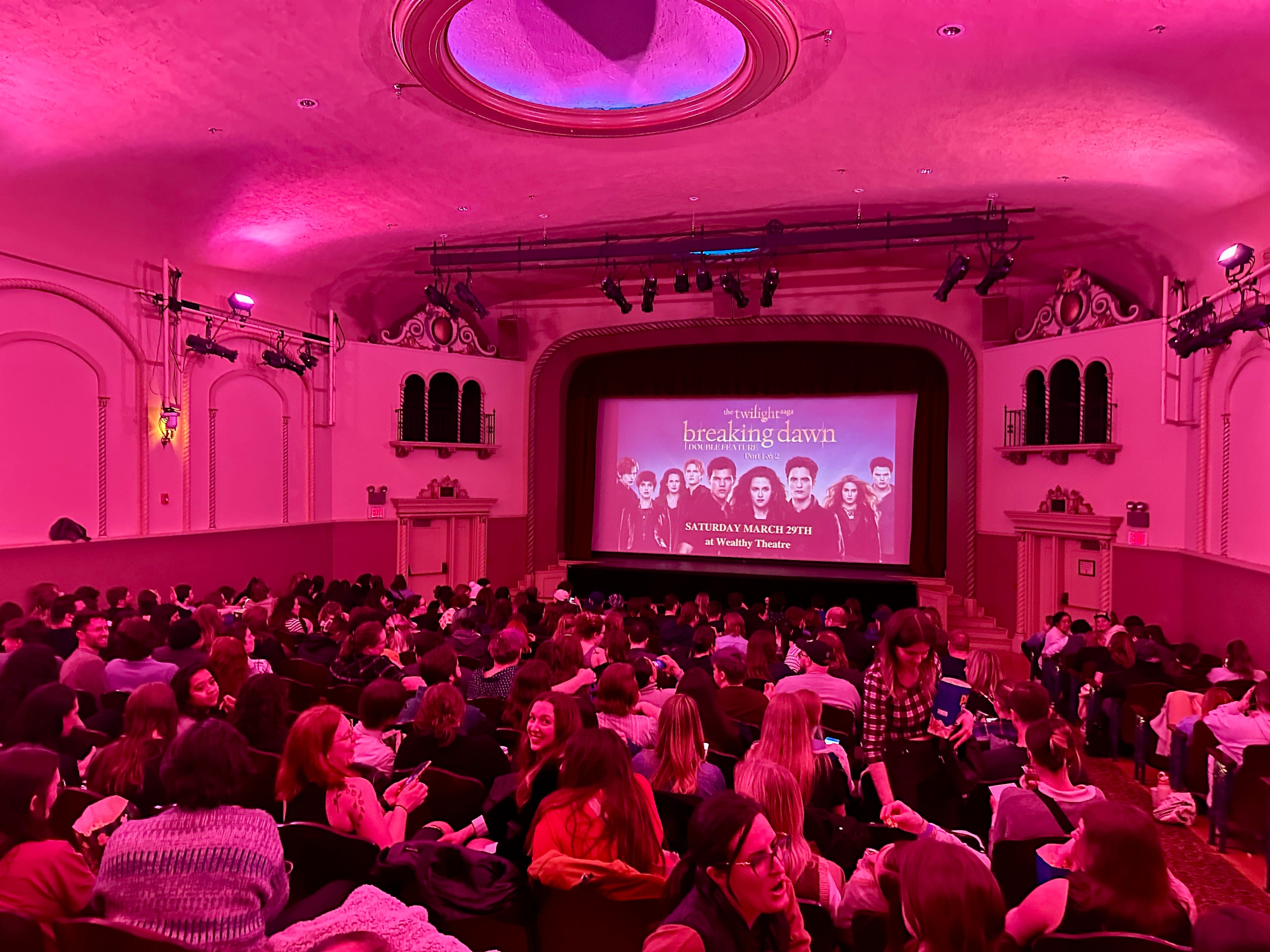
The double feature screening of Twilight: Breaking Dawn Parts One and Two at Wealthy Theatre.
This was already a highlight of the year for me before the films even started because I got called up from my seat to help do a full saga recap before the lights went down, winning a Twilight-themed calendar for my efforts (shout out to Kyle Macciomei).
As with the previous screenings in Wealthy’s Twilight retrospective, it was a riot. Damn near every line of dialogue was a laugh line, and I am so grateful to have been part of the crowd screaming back to the screen “you nicknamed my daughter after the Loch Ness monster!”
However, the moment I will cherish most was when the credits rolled for Breaking Dawn Part Two. For those who don’t know, it is a roll call for the whole franchise: any actor who spoke more than three lines in any of these movies gets their name in the credits in a montage set to Christina Perri’s “A Thousand Years.” The whole crowd sang along, people waved their phone flashlights like lighters at a concert, and the cheers for the big three actors at the end felt like they could have brought the Wealthy Theatre roof down on my head.
RYAN COPPING:
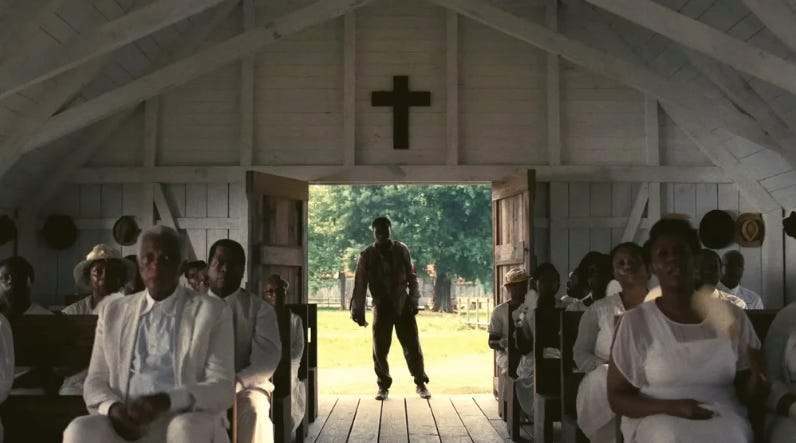
2025 ended up having a lot of great and good films, although you sure would not have known it from one of the least interesting summers of would-be blockbusters in recent memory. Many of these movies regrettably did not get the wide release they deserved or flew under the radar. This list of The Five Best Films of 2025 is of course conditional, as I have not had an opportunity to see many of the foreign, indie, and documentary films of 2025 that did not get a wide release.
1. Sinners (Ryan Coogler): It’s deep. It’s culturally relevant. It has some killer music. It’s a great horror movie, and it’s a whole lot of fun. I knew when I saw Sinners back in March that it was very likely going to be the year’s best movie, and nothing came close to changing my mind.
2. East of Wall (Kate Beecroft): East of Wall got a limited release, which is not surprising considering it’s a low-budget indie with no stars. Few films, however, have the sense of place and atmosphere of Beecroft’s debut, which features the mother and daughter team of Tabitha and Porshia Zimiga playing versions of themselves in this (seemingly) barely fictionalized slice of life tale in the world of horse trainers in rural South Dakota. You owe it to yourself to make the effort to track this down and get lost in the beautiful, bittersweet movie world it creates.
3. Highest 2 Lowest (Spike Lee): One great filmmaker to another — Lee remakes High and Low (1962), one of Akira Kurosawa’s most underrated movies. Both directors ask the question “am I my brother’s keeper?” to their arrogant, flawed protagonist (here, Denzel Washington in another great performance), and both conclude, movingly, the answer is: yes.
4. The Secret Agent (Kleber Mendonça Filho): One of the best of the recent string of films about dictatorships in Latin American countries in the 1970s, this Brazilian puzzle of a movie manages to make several political points without audience handholding all while being an exceptionally evocative memory piece. The conclusion to the film features some of the best screenwriting I’ve encountered in a long time, and the film is worth seeing alone for the much-lauded lead performance from Wagner Moura.
5. Wake Up Dead Man: A Knives Out Mystery (Rian Johnson): Rian Johnson has effectively brought back the mystery as a movie genre, and I could easily watch Benoit Blanc solve one as a tradition every Christmas. A theme on this list are movies that manage to make relevant or profound statements without being overly obvious, and this one manages to do so in the best tradition of Arthur Conan Doyle and Agatha Christie.
Runners up: Dead Man’s Wire (Gus Van Sant), Ella McCray (James L. Brooks)
Shockingly great film of the year: Predator: Badlands (Dan Trachtenberg)
Overrated film of the year: Hamnet (Chloé Zhou)
ANNA DAVIS:
THESE GO TO ELEVEN: MUSIC AT THE MOVIES IN 2025
George Lucas said “sound is fifty percent of the movie-going experience,” and in 2025 that 50% RULED — specifically the sounds of music! So many incredible scores, needle drops, and unique approaches to using music as storytelling. Here are some of my favorite music moments of 2025:
FAVORITE SCORES:
Sinners (dir. Ryan Coogler): Ludwig Göransson has done fantastic work for years, but his score for Sinners is on another level. The “I Lied To You” scene is an obvious choice for this list. Encapsulating hundreds of years of culture with a single song over a three-minute oner is what it’s all about, baby!
Train Dreams (dir. Clint Bentley): Train Dream’s protagonist, Robert Grainier (Joel Edgerton), leads a quiet life in the wild of the Pacific Northwest. A life that is so very quiet at times it’s deafening. Bryce Dessner’s beautiful score doesn’t disrupt the emotion of Grainier’s solitude, instead elevating the sounds of nature through period-accurate instrumentation blended with modern production. Almost guaranteed to leave you a little misty-eyed!
Honorable mentions: Marty Supreme (composer: Daniel Lopatin), Bugonia (composer: Jerskin Fendrix)
FAVORITE NEEDLE DROPS:
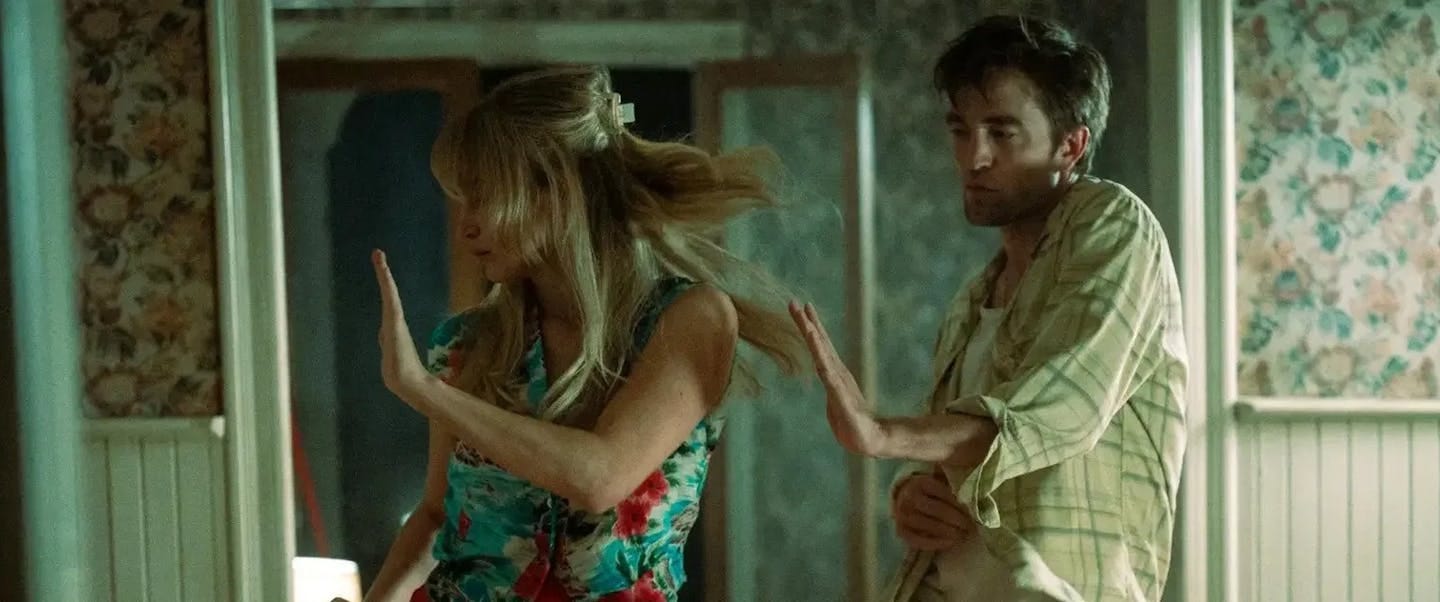
Die My Love (dir. Lynne Ramsay): Hard to say if I liked the use of Cream’s “Crossroads” or John Prine & Iris DeMent’s “In Spite of Ourselves” more. Both are used brilliantly to ratchet up emotions and illustrate key moments of character development. I recommend checking out this interview Lynne Ramsay did discussing her process for integrating music into her films.
Sentimental Value (dir. Joachim Trier): Joachim Trier is quietly a needle drop master, consistently curating soundtracks that feel straight from his Spotify without ever being too obvious. I particularly loved how “Cannock Chase” by Labi Siffre lathers on the emotional impact of the film’s familial tension.
Honorable mentions: One Battle After Another: “American Girl” by Tom Petty and the Heartbreakers, Weapons: “Beware of Darkness” by George Harrison
FAVORITE USE OF MUSIC AS STORYTELLING:
Sirât (dir. Oliver Laxe): Sirât is about ravers in the desert of Morocco so, of course, electronic music is central to the story. The ethereal techno from Kangding Ray lulls both the characters and the audience into trance-like peace before disorienting or disturbing the viewer upon its interruption. Who knew club beats could be so upsetting?
Honorable mention: Blue Moon (dir. Richard Linklaker)
PARKER HAFFEY:
Four viewing experiences defined 2025 for me:
1. The return of movies-as-cultural-events, with films like Mission: Impossible – The Final Reckoning, Sinners, and One Battle After Another. I didn’t necessarily love each film, but seeing these and participating in the evolving discourse related to them was a lot of fun. Each felt like a celebration of cinema and made me feel like part of a broader community of film enthusiasts.
2. The David Lynch retrospective put on by GRFS. This had a major impact on my year. My wife, Taylor, and I managed to catch every film in the series. Looking back on the showings, The Straight Story is probably the most special to me. It’s a film I probably never would’ve seen otherwise, and experiencing it on the big screen at Wealthy Theatre — in a room full of good energy and positive vibes — made it unforgettable. Truly a special experience.
3. SLC Punk, shown as a Tuesday Night Movie at Wealthy Theatre. The audience brought a certain energy that meshed fantastically with the film. Of all the films I saw in theaters last year, this screening was the most fun and added the most to the overall experience. One of my favorite showings of the year.
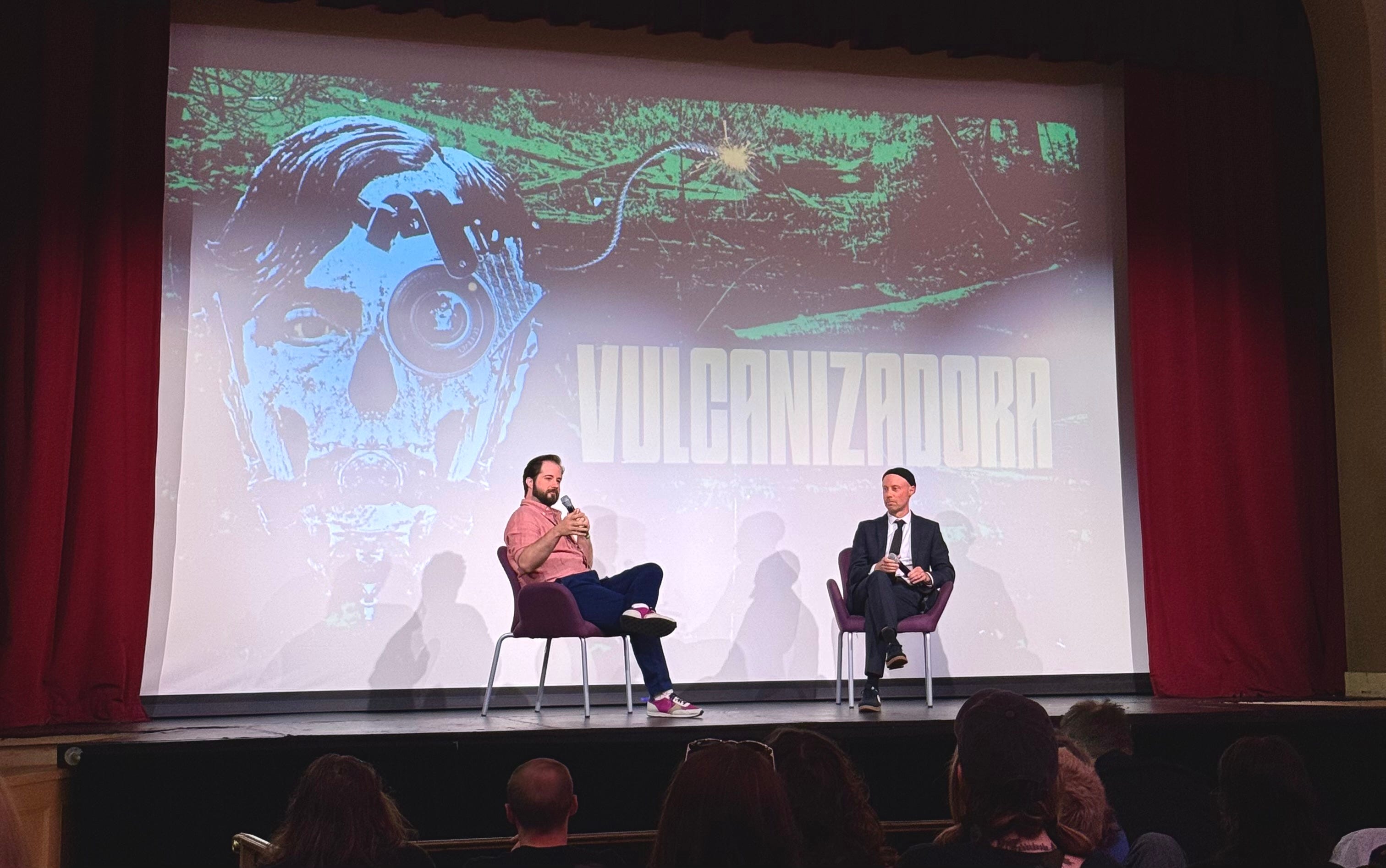
4. Vulcanizadora at Wealthy Theatre. I’ve been a fan of Joel Potrykus since his 2016 film The Alchemist Cookbook way before I moved to Grand Rapids or knew he was based here. I missed the first showing of Vulcanizadora and only barely made the second, but I’m glad I did — I was blown away. Easily one of the most powerful films I watched last year.
I’m so thankful to be a part of this community and excited to see what 2026 has in store for us!
ERIK HOWARD:
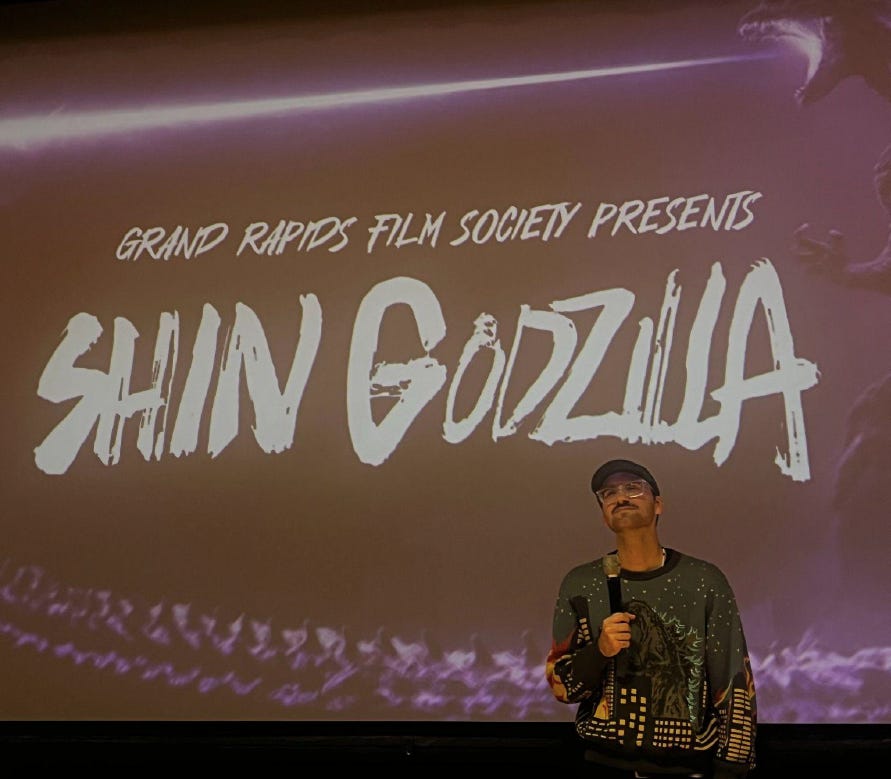
2025 was an interesting year in my life as it felt like the first time I “struggled” with cinema. For the past five years or so, cinema evolved from a passive interest to something that, for a brief time, I could call a job. It became a unifying medium between my passion for creating art and my desire to work in a space that would foster and reward creativity. As I’ve grown older beyond my college years, those days of being able to carve out entire weekends to work on a friend’s set or sit in a room workshopping ideas for my own project with amazing colleagues or professors have begun to fade. In this year of soul-searching, I had truly thought that I needed to leave cinema behind as I became unable to separate myself from the growing terror I had after the 2025 presidential inauguration. I left behind a career in news practically devoid of creativity, and thought that it was the start of my transition away from the creative thrill that filmmaking brought me. That feeling changed rapidly, however, when I was not just informed of a Grand Rapids Film Society screening of the anniversary edition of 2016’s Shin Godzilla — but also asked to introduce it.
Now, my initial reaction was nothing short of excitement combined with a “finally!” given I’d been lobbying for a Godzilla film under the GRFS banner for some time, but this felt different. Shin Godzilla is not just a traditional film in the sense you’d expect a Godzilla movie to be. There’s no elaborate duel with some other massive kaiju, or a plot focused around some average suburban family’s intentions to destroy the planet because we took the world from giant lizards, spiders, and even extraterrestrial dragons. This is a movie about Godzilla washing ashore, as he often does, and rather than looking at civilization fall in a physical sense we instead see it fall from the inside. Rather than blockbuster action, we watch bureaucrats waltz from one room to the next to hold various meetings about the economy, military intervention, and how to pick the nation’s next leader. While this may sound antithetical, it was anything but inside of Wealthy Theatre: it was joy, laughter, and wide smiles even as Godzilla would crush something like a hospital.
As a die-hard Godzilla fan and fan of Shin Godzilla’s interpretation, I had never felt this way about a film before. I’ve been seated for many transformational film experiences across GRFS’ life, but to face this hybrid between childlike fascination of a giant lizard crushing a city and a highly satirical look at political systems and decisions made me feel more seen than I ever had. And even saying that sounds as ridiculous as it can seem — “you felt seen watching a Godzilla movie?” — and even as I write that sentence, it still sounds funny. But I think what this screening and the amazing audience taught me that night was that cinema evolves with you. It may first manifest as this general interest where you are on the outside looking in, wondering what this art form can offer you as you hop from genre to genre figuring out what keeps you the most engaged so you can set down your phone and forget about the world around you for a few hours.
Then there’s that feeling when you find it, that favorite film of yours that empowers you to watch more from the team or individual who thought of that brilliant concept that makes you realize cinema is something more. Opening up a streaming platform like Netflix or HBO MAX suddenly looks like an opportunity to hear incredible voices or see jaw-dropping spectacle more than an overwhelming library of background noise.
And then you mature and realize that cinema can be more than entertainment and, instead, can be a time for reflection; where the films you’re digesting could open room for complicated discussion around issues affecting you and your environment with those around you who you would’ve never interacted with otherwise. You may even find yourself in a community of like-, or opposite-, minded individuals who challenge not just your worldview but your creative vision. From recommending their favorite watch that week to offering critical feedback on a story you yourself may be writing, it’s in that community that you realize cinema survives as a unifying factor. One where we amplify our voices and recognize the power that art holds to push back against adversity in times where it feels like everyone and everything is trying to separate rather than unite. Suddenly no problem seems too small, or you find yourself feeling more seen and valid when a story hits the box office, or — most importantly — you are able to just find joy in the little things...like a giant mutated lizard fighting other creatures at the center of the Earth, Boston, or Japan.
HAILEY JANSSON:
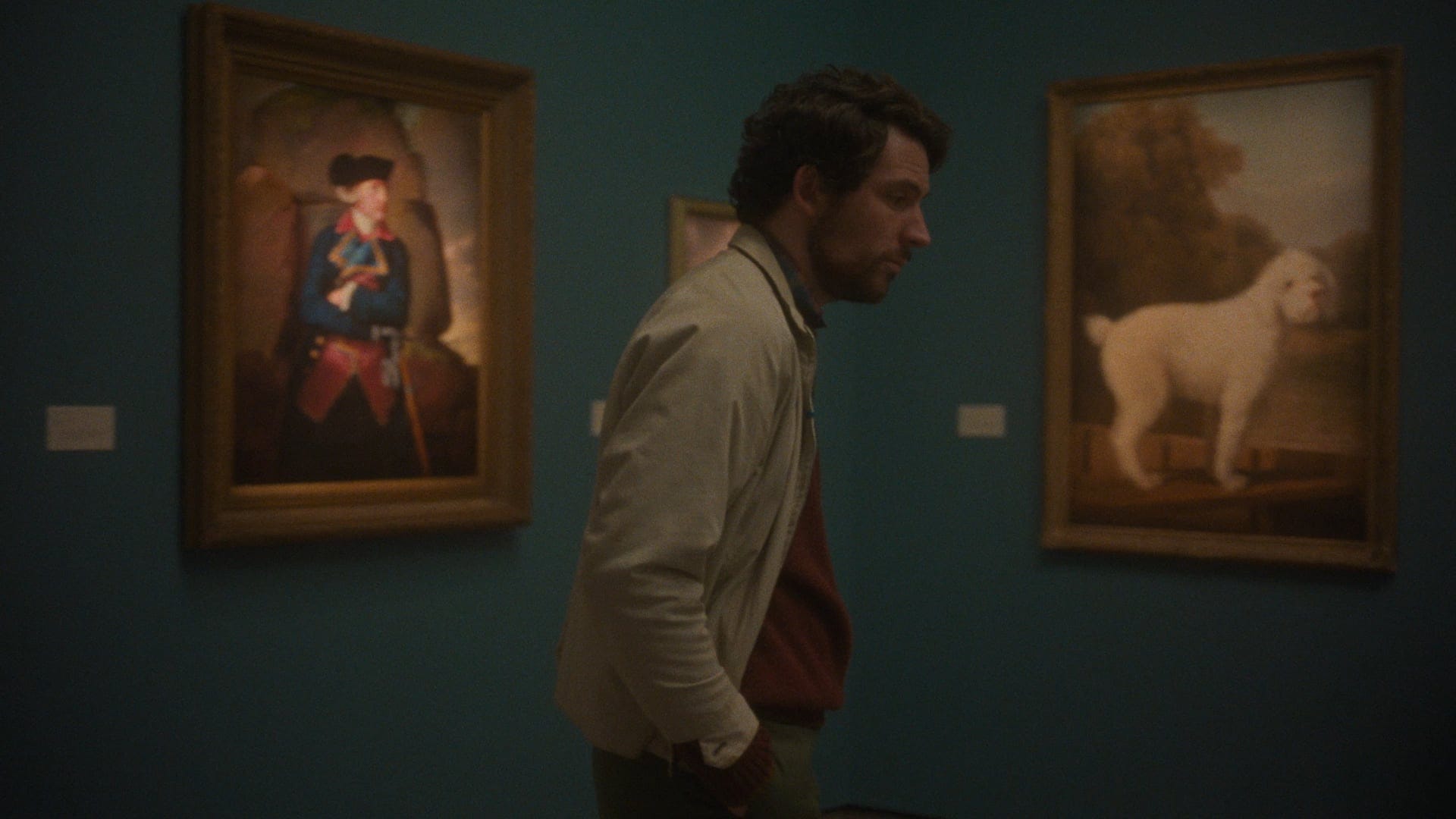
I first saw a Kelly Reichardt film in 2018: Meek’s Cutoff at home and on a laptop. After devouring her filmography of slow cinema, I set my sights on her next theatrical release: First Cow. It was slated for wide release in March 2020 and, if you can believe it, circumstances kept that film entirely out of cinemas. Since the pandemic, theatrical windows have shrunk, audiences have diminished, and countless think pieces on the decline or death of movie theaters have been published.
It wasn’t until Showing Up, released widely in 2023, that I saw Reichardt in cinemas, and my only option at the time was Ann Arbor’s State Theater. Fast forward to 2025 and Reichardt releases The Mastermind which received a theatrical window at the local AMC. I paid full price to catch the quiet heist film starring Josh O’Connor scored with avant-garde jazz. I’m not sure what finally brought Reichardt to my backyard, but since 2018 I’ve learned not to take cinematic experiences for granted.
No one would argue that Reichardt’s films could save the state of theaters in 2026, but it is certainly a miracle that an artist like her, a totally independent director, can still get films made — and that people like me can see them in my hometown. A little money, time, and attention is small price to pay for a miracle.
JOSHUA POLANSKI:
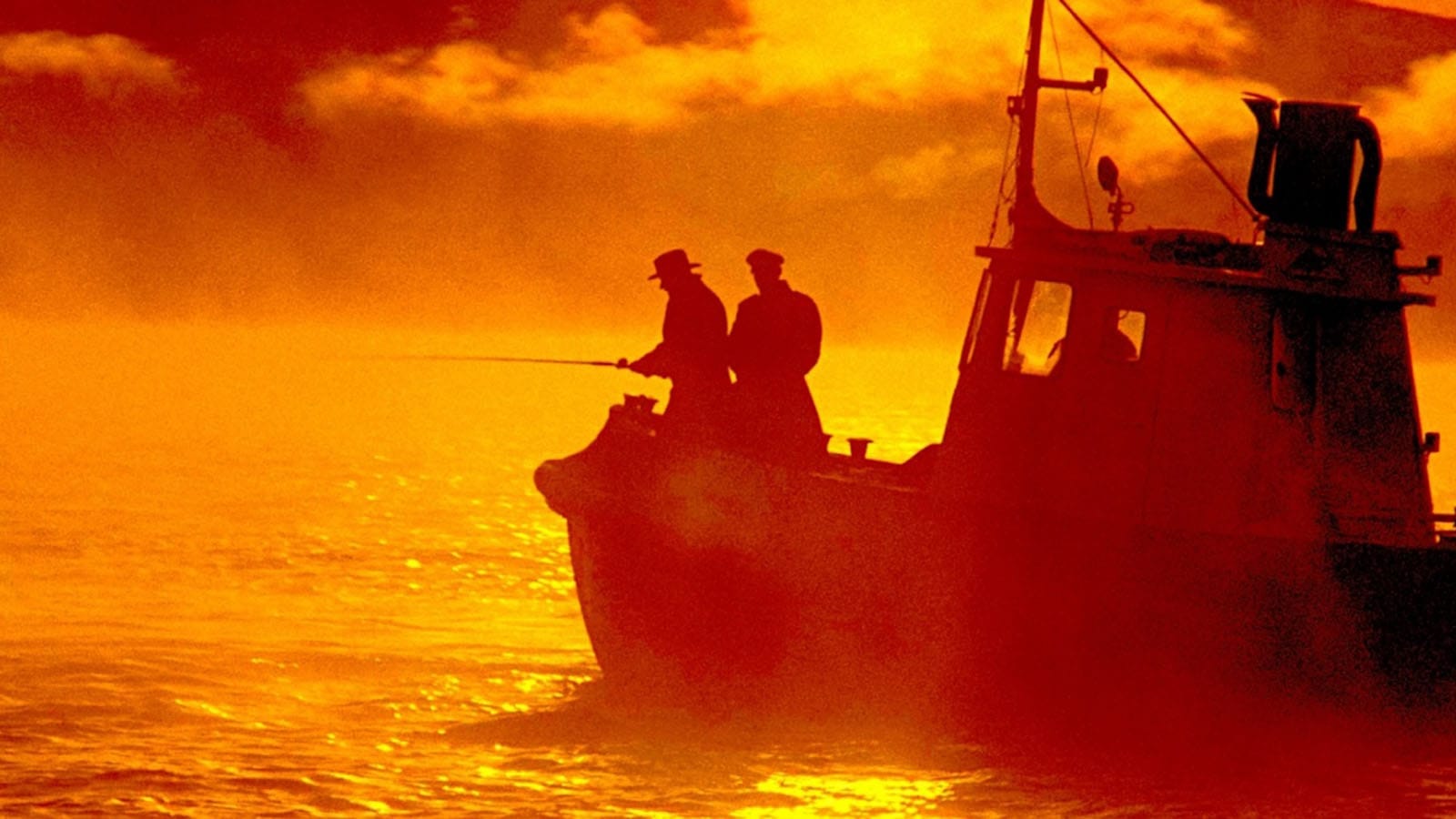
Rob Tregenza’s The Fishing Place was one of the few masterpieces I was able to catch out of the roughly 250 new releases I saw in 2025. Tregenza might be Kansas’ Jean-Luc Godard, and his newest film taps into the spirit of the French maestro as he breaks the fourth wall, hunting the demons of the Nazi-sympathizing right. It’s also one of the most timely films of the moment given the rise of the alt-right around the world.
The first four-fifths of The Fishing Place slowly moves through the coastal Norwegian county of Telemark during Nazi occupation as Anna (Ellen Dorrit Petersen), a Nazi prisoner, is ordered by her fascist “liberator” Hansen (Frode Winther) to spy on a newly arrived Lutheran pastor, Honderich (Andreas Lust), as his housekeeper. Anna, tormented by the moral contradiction of resistance and self-preservation, finds herself desperate and powerless enough to collaborate. This scenic and solemn hour, which wends viewers through some of the most beautiful images of the decade, reminds us that no number of Nazis can stifle the beauty of this world. The last 22 minutes abruptly and unceremoniously cut to the extreme present with a fourth wall-breaking and fluid crane-powered long shot of Tregenza’s own film set. The jolting edit simply and sufficiently translates the film’s philosophical questions around fascist collaboration and resistance to the present.
[This blurb is an edited and condensed version of a piece originally written for In Review Online’s Best Films of 2025 collective list.]
JOEL POTRYKUS:
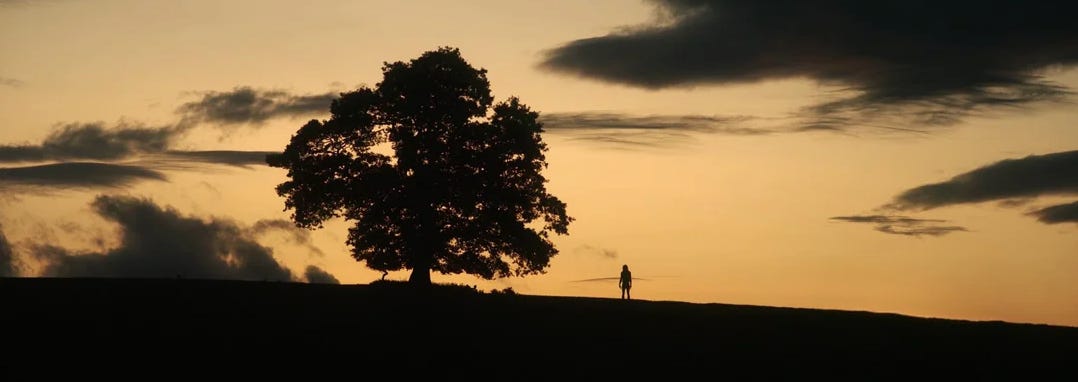
I saw most of the big ones, but nothing really hit me hard this year. And since I don’t use my Letterboxd account, I’ve forgotten most of what I saw. But some things that I do remember about 2025 at the movies is the nearly-perfect first half of 28 Years Later. I respected how Eddington pushed everyone’s buttons. PTA shot the hell of out of that road. Bugonia had the best needle drop with “Basket Case.” I love how Kelly Reichardt makes crime movies. Life of Chuck is corny and theatrical, but it got me thinking and feeling which is kind of the point of all this. F1 is better than Black Bag. The second Sisu is so Looney Tunes that it has a legit Wile E. Coyote reference. Sinners didn’t know when to end. Josh Safdie likely has more juice than Benny Safdie (or maybe Ronald Bronstein is the magic ingredient?). The Palme D’Or likely didn’t go to the best of the fest. Never in my wildest dreams did I think I’d live long enough to see a Predator making conversation...and never did I think an animated Predator film would be the third best in the series.
My three favorite watches of 2025 came from the best decade of American film: the 1970s. A re-watch of Rocky, having not seen it for a very long time, as part of a Stallone marathon in my living room over a long winter break. A first-time watch of Jeremiah Johnson. And, somehow, I’ve lived this long life having thought I’d already seen Dog Day Afternoon — easily an all-timer.
Bring on this The Odyssey business in 2026.
TRISTAN SCHAFER:
It would be far too easy to interpret the prompt “Best Cinematic Experience of 2025” as the best movie I saw in theaters in 2025. If that were the case, it’s an absolute, no-questions-asked slam dunk for Cleo from 5 to 7 back in January as part of GRFS’ Movies at the Museum program. It’s a decent answer but not a very interesting one. What it lacks is any insight into why the cinematic experience in particular is so appealing. There’s another experience I had with more of that insight.
A few years back, I drove out to Howell, MI to see Funny Face at the Howell Theatre. It was early February, and the snow was frankly unbelievable. But, seeing as how I’d driven across the state and set aside multiple days staying at my parents’ house, I fell victim to the sunk cost fallacy and drove 20 minutes through the most miserable, hellish weather of the year to see Audrey Hepburn on the big screen. The Technicolor musical comedy was the most perfect escape I could have asked for given the tundra outside. It had never felt better to sit with a meager audience of three other people and watch light entertainment on the big screen.
Two years later, as Anora was about to leave theaters, I took it upon myself to head out and finally see the movie everyone had been talking about. Once again, the ice and snow were horrific. Each intersection was a nightmare, each stop sign a personal challenge. Where leaving Funny Face felt like being smacked with reality after a brief escape, leaving Anora gave me a deeper connection to its snow-caked conclusion. The real world felt like an extension of the film and vice versa.
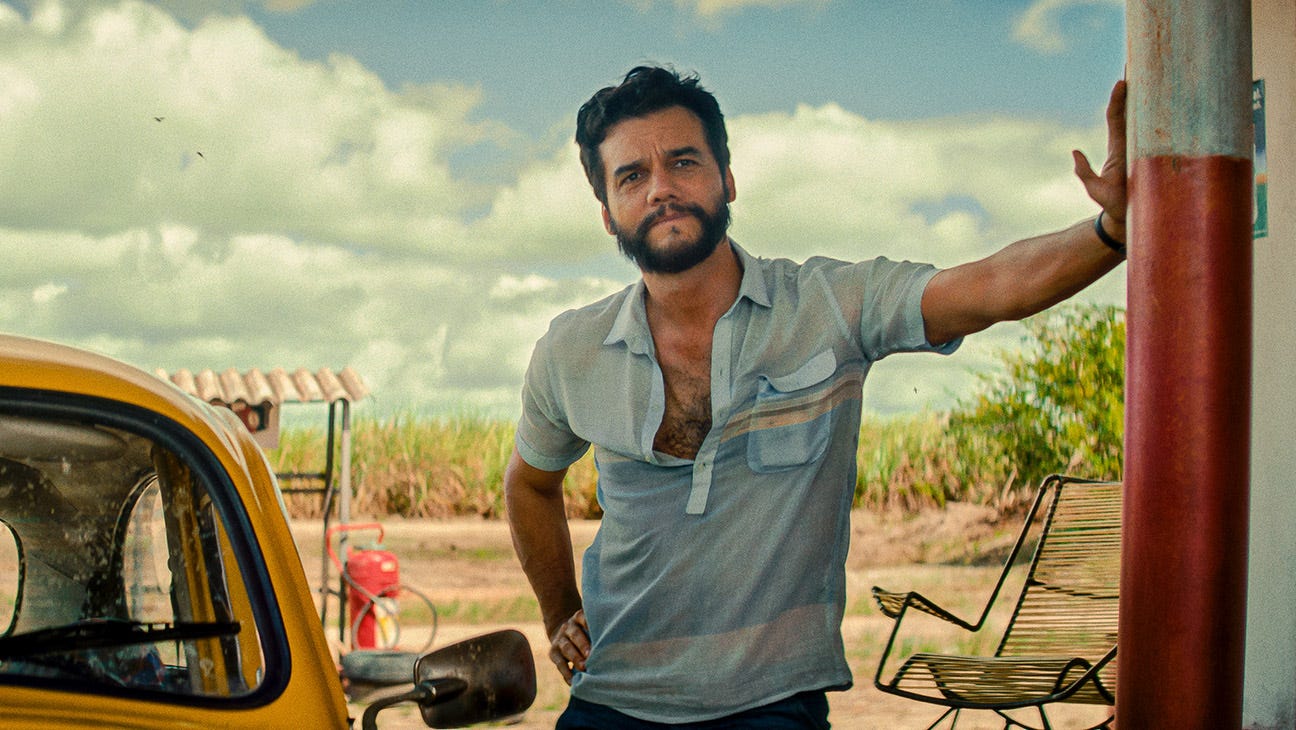
In 2025 I found myself, for the third time in four years, driving through apocalyptic snowfall to see a film in theaters with maybe three other people in attendance. This time it was Kleber Mendonça Filho’s The Secret Agent. It had a galvanizing effect on me. Not the film per se, but the decision to see it then and there; the realization that I had made a habit out of trudging through the worst weather imaginable to sit in silence with my favorite artform. I realized that the cinematic experience genuinely did mean that much to me, that I consistently find it worthwhile to risk life and limb for the opportunity to give someone’s hard work my fullest attention under the most ideal conditions. It was not the best film I saw all year, but it was — in a roundabout way — the most impactful.
TERRA WARREN:
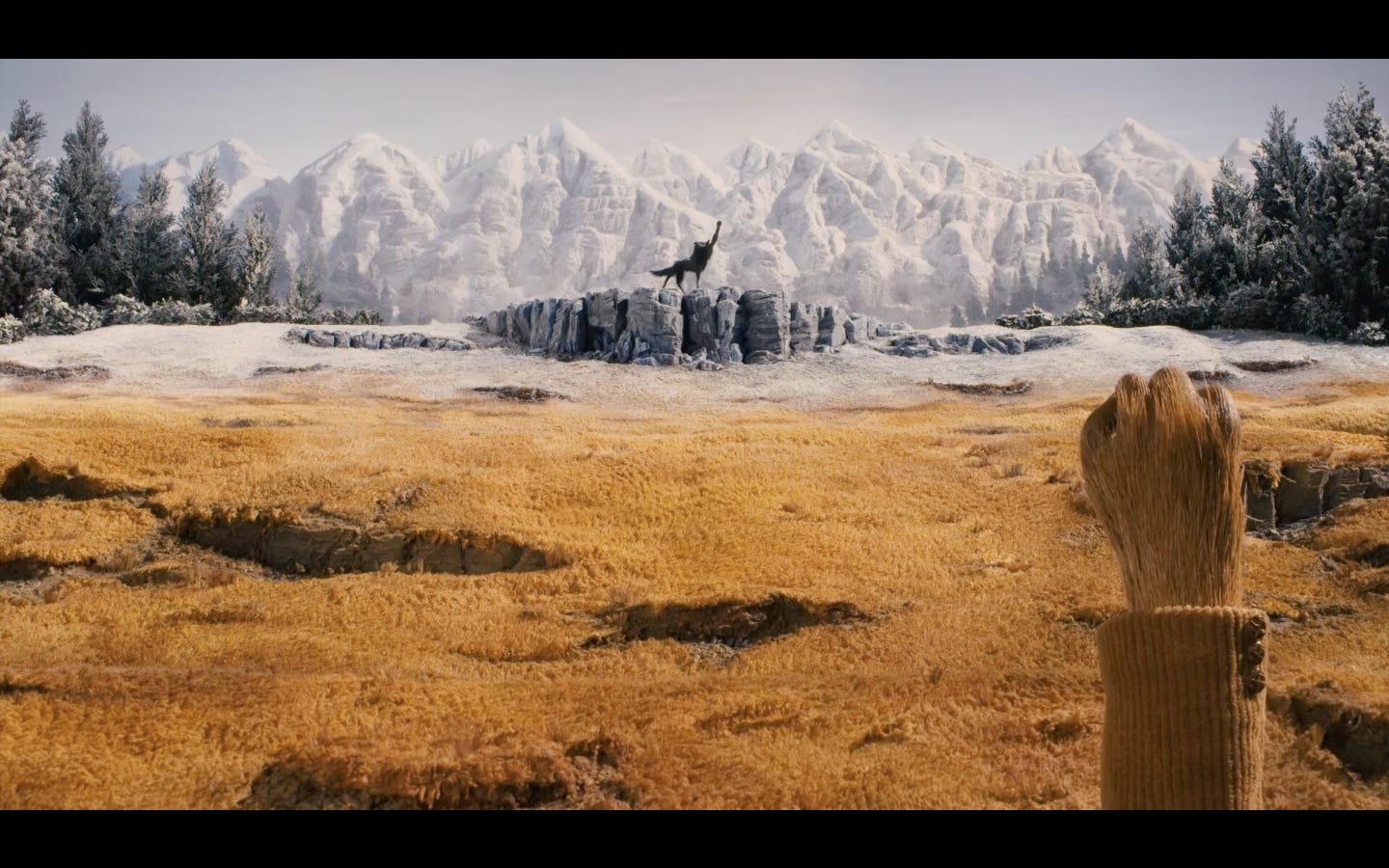
Fantastic Mr. Fox Revisited
I first saw Fantastic Mr. Fox in 2009, when I was eighteen, when it opened, when Wes Anderson felt unavoidable. The imitations were omnipresent, online and in real life. There were whole stretches of that moment where the hyper-symmetrical and jewel-toned photos, the little animal prints, the font ‘Futura,’ and The Kinks were inescapable. His aesthetic impact had reached its saturation point. From my cynical perspective, Anderson was making a children’s movie that I deeply suspected was for an infantilized millennial population, not actual children. It was also the beginning of a Wes-epoch marked by a heightened vigilance toward overly-meticulous and fetishistic shots (beyond what we’d seen before) and choreographed filmic mechanisms reaching the point of suffocation. The loose humor that juxtaposed the tidy visuals felt lost — a criticism I disagree with in retrospect with the benefit of more of his movies to prove me wrong, but the sentiment felt real at the time. All in all, I wrote it off, annoyed and frustrated that such an interesting director was making a children’s movie for burgeoning adults who, to my young and jaded mind, didn’t want to leave childhood behind.
Fast-forward to the present day, sixteen years later, and I have two 3.5 year olds of my own who have long insisted — with urgency and ferocity — on watching one of the four Toy Story movies on the regular. At any moment, one of the boys will look at me with the calm authority children have when they know the world must comply and demand a Randy Newman number, and I — designated household bard — will sing it, because I love them. But my husband and I sought (and seek) freedom from the cold grip of John Lasseter. We did what parents do, which is research the thing before you let it into the house. We asked the internet, essentially, is Fantastic Mr. Fox actually for children — we couldn’t remember. We pressed play. As it happens, the movie is actually appropriate for children, and it is, in the real sense, a family film: one of those rare things adults can watch with genuine interest, and children can watch without being patronized. Each frame emanates a glittering warmth, and when the wolf raises his fist, I really almost cried.
The tables have turned: it is now the parents of the household who attempt to incept the idea of watching the movie we four can all enjoy. There’s a moment where one of the characters yells the word “TRASH,” and it’s become our first inside joke. One of my sons has taken on saying “You’ve made a bad song, Petey!” whenever the mood strikes him. They love The Rolling Stones’ “Street Fighting Man” and hum it from the backseat. A previously-ignored pair of tan corduroy pants in their closet has been named the “Fox Pants” and are fought over.
Perhaps most miraculously, the film marks a turning point in our familial dynamic. Raising babies is truly wondrous but can be numbingly boring — baby interests are often in learning about the sounds animals make and eating bananas. We have now entered an era wherein we share something that we all like and bond over. It’s become a portal to introducing them to the parts of the world we love in an age-appropriate manner and to discovering what interests them in return. I hold firm that one of the sacred purposes of a parent is not to create dutiful children but rather interesting, caring, responsible adults, and children’s media is so often aimed at reminding children of their essential duties of cleaning up after themselves, saying please and thank you, etc. All important, but there’s more to life, and I now see my children blossoming into people of the world. Encountering this movie again has allowed me to meet them for the people they might become and to wonder what will bring us together again next, and for that, it’s my 2025 cinematic highlight.
***
A big thank you to all of our special guest contributors!
UPCOMING EVENTS
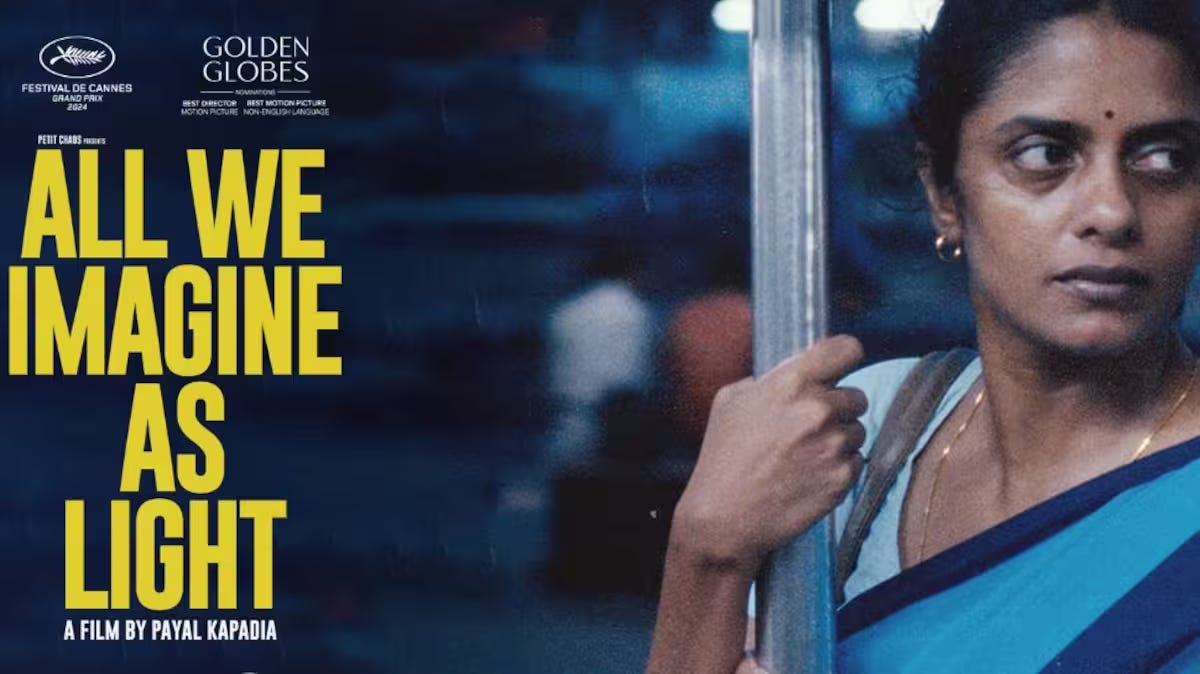
ALL WE IMAGINE AS LIGHT (Rohrwacher, 2023)
[FREE EVENT, PRESENTED BY CHIAROSCURO INTERNATIONAL FILM SERIES]
WHEN: Sunday, February 1st, 2:00pm
WHERE: The Wealthy Theatre
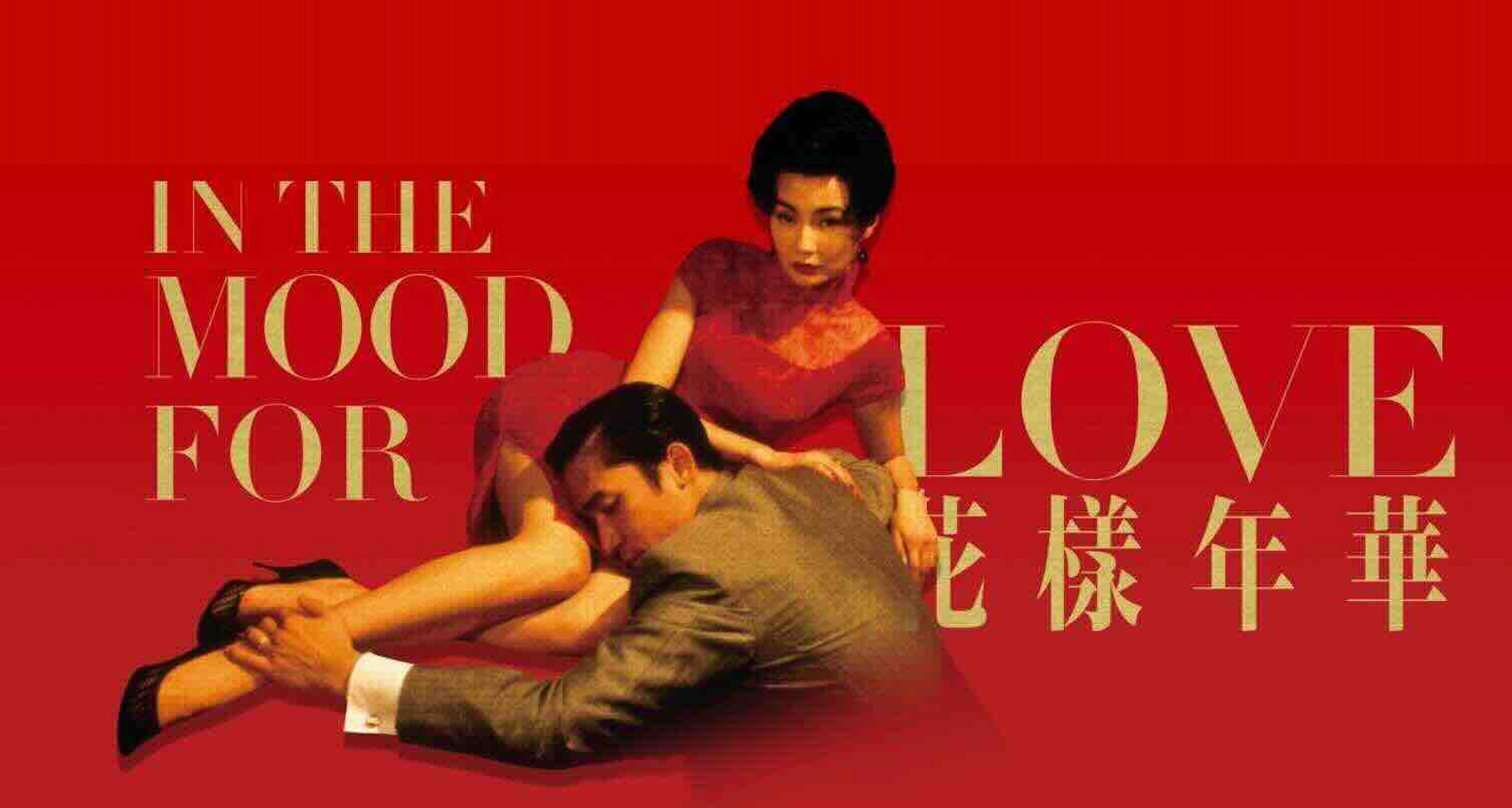
IN THE MOOD FOR LOVE (Kar-wai, 2000)
WHEN: Monday, February 9th, 8:00pm
WHERE: The Wealthy Theatre

FILM SOCIETY ROUNDTABLE
[FREE SOCIAL EVENT]
WHEN: Thursday, February 12th, 7:00pm (Doors at 6:30pm, arrive early to mingle!)
WHERE: The Front Studio - Annex (right next to Wealthy Theatre!)
We appreciate you taking the time to read this installment of BEAM and truly hope you’ll continue to do so. Be sure to subscribe to get a new issue in your inbox every week.
Plus, join us on social media, where the conversation is always happening, and you can get the most immediate updates from GRFS.
Know someone you think will dig BEAM FROM THE BOOTH? Send them our way!
And if YOU would like to contribute a piece to an upcoming issue, we highly encourage you to send us an inquiry.
Look for ISSUE #129 in your inbox NEXT WEEK!
Until then, friends...

