
ISSUE #133
BEAM FROM THE BOOTH | GRAND RAPIDS FILM SOCIETY
[EDITED BY: SPENCER EVERHART & GRIFFIN SHERIDAN]
Welcome back to BEAM FROM THE BOOTH, the official newsletter of the GRAND RAPIDS FILM SOCIETY!
A reminder that we’re just about one-third of our way through MOVIE MARCH MADNESS. If you haven’t been, be sure to join us over on our Instagram stories. New match-ups go live at Noon EST each day as we work towards our winner, which will be screened at a special event this spring!
Plus, join us NEXT WEDNESDAY (3/18) for the return of our OPEN PROJECTOR NIGHT event, which highlights independent short films of all genres and styles with a Michigan connection. Check out the trailer for this program’s lineup below!
Things are heating up in the 2026 Oscars Race, and our own Kyle Macciomei and Anna Davis are here with another video report putting together their own tier lists ahead of this Sunday’s ceremony.
Plus, Ryan Copping joins us to ruminate on a unique work of forgotten British cinema.
Enjoy!

ROAD TO THE OSCARS 2026
VIDEO: PRE-SHOW TIER LIST
[BY: ANNA DAVIS & KYLE MACCIOMEI]
The Oscars will air live on ABC & Hulu on Sunday, March 15th!
Use the link below to fill out the GRFS Oscar Ballot and tell us who you think should win in each category. After Oscar night, we will announce the results to showcase what films and crafts were most deserving from this past year of cinematic experiences.
Submissions close March 13th at midnight! Be sure to stay tuned for more Awards Season coverage from GRFS.


INSIDE THE MAGIC BOX
[BY: RYAN COPPING]
Movies have a hard time celebrating themselves. Most films about filmmaking tend to either show the dark, narcissistic side of Hollywood (think Wilder’s Sunset Boulevard), or, on a better day, the difficulty of birthing a work of art (Fellini’s 8 1/2). Often, attempts at celebrating the greatness of cinema and the undying, unrequited, slightly abusive love that many have for it (footnote: why else are you reading this?) end up being either pretentious or hackneyed.
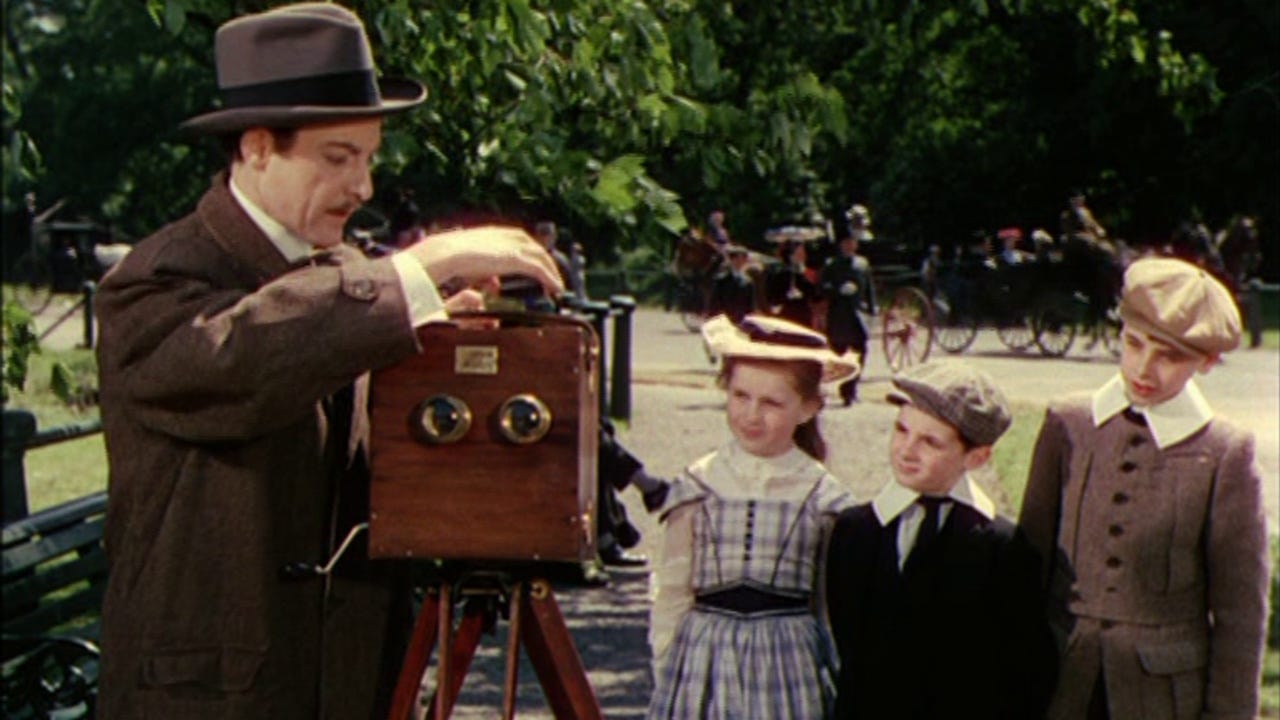
The Magic Box (1951), directed by John Boulting, is a movie that has been forgotten by almost everyone other than aficionados of British cinema. It shouldn’t be. It’s not a masterpiece in the way that we think of Battleship Potemkin or Casablanca as being great works of art — despite its many pleasures, no one is going to argue it should be on the Sight and Sound list. At times it struggles with biopic cliches, and some of the dialogue is painfully on the nose. However, if there was a holiday when cineastes would celebrate the medium, The Magic Box would be watched on that day, every single year.
The movie is about someone even most film historians have barely heard of: the English inventor William Friese-Greene (played by Robert Donat, in a performance that lives down the street from Mr. Chips). Friese-Greene is a candidate by some for being the inventor of cinema, making the first movie, or both. Or neither, considering that the vast majority of people who have studied these things credit either W.K.L. Dickson or the Lumiére Brothers with those achievements. The Magic Box acknowledges this controversy, which at times borders on a philosophical question (what actually is a movie, anyway?). In the film, when asked by his son Graham (John Charlesworth) if he invented moving pictures, Friese-Greene replies “Yes, I think I did. I wasn’t the only one, but I think I was the first.” The film seems to argue that its protagonist was one of many working in the same direction, despite being made as a celebration of the British film industry released during the 1951 Festival of Britain and featuring numerous cameos from stars of the period.
Whether or not the real Friese-Greene invented cinema, the movie’s version of him is possibly the first to suffer the downfall so commonly associated with success in that field. A poor businessman, he does not know how to successfully market and make money off his invention. He creates a camera that will allow untold others to use to create wonderful things with, but, like those others, is trapped in an economic system that ultimately values money more than magic.
The movie’s unusual structure, vaguely reminiscent of Citizen Kane, allows us to see this. We open with the near-penniless Friese-Greene on the day of his death in 1921 as he visits his estranged second wife (Margaret Johnston). In a flashback from her perspective, we see the dissolution of their marriage and family; a loving husband and father, he was nonetheless unable to provide for them either financially or emotionally, always searching for a second invention that will bring home the bacon which never came. This sad first act gives the audience a sense of somberness throughout the rest of the movie — we know where our hero will end up, despite his achievements.
The second and third acts are a flashback from the point of view of Friese-Greene himself as he remembers happier days, and the film presents us a wonderful evocation of the world of still photography, and then cinematography, in the 19th century. We watch as the inventor slowly develops his idea, constructs an apparatus to achieve it, and then, finally, a late-night test.
Though the film is not perfect, its best scene is one of the most haunting in all of cinema. Late at night, a joyous Friese-Greene runs out of his flat, eager to share happy news with anyone he can find. The first person he encounters is a police officer (played, in some brilliant casting, by the great Lord Laurence Olivier), who believes that this crazed, raving man may have committed a murder. Accompanying the inventor back to his lab, the constable is shown the first movie. He can’t understand what he’s watching, but he knows it’s astonishing, important, and wonderful. Something new and beautiful is now in the world that hasn’t been there before. We know that Friese-Greene, and so many like him, will eventually be driven out of Eden when they are forced to eat the forbidden fruit of money. But that doesn’t change that the box that makes movies is both magic itself and produces magical things, lighting the lives of so many in our fallen and chaotic world.


If you’d like to nominate someone else in the community for a future spotlight, please fill out this form.
We appreciate you taking the time to read this installment of BEAM and truly hope you’ll continue to do so. Be sure to subscribe to get a new issue in your inbox every week.
Plus, join us on social media, where the conversation is always happening, and you can get the most immediate updates from GRFS.
Know someone you think will dig BEAM FROM THE BOOTH? Send them our way!
And if YOU would like to contribute a piece to an upcoming issue, we highly encourage you to send us an inquiry.
Look for ISSUE #134 in your inbox NEXT WEEK!
Until then, friends...

